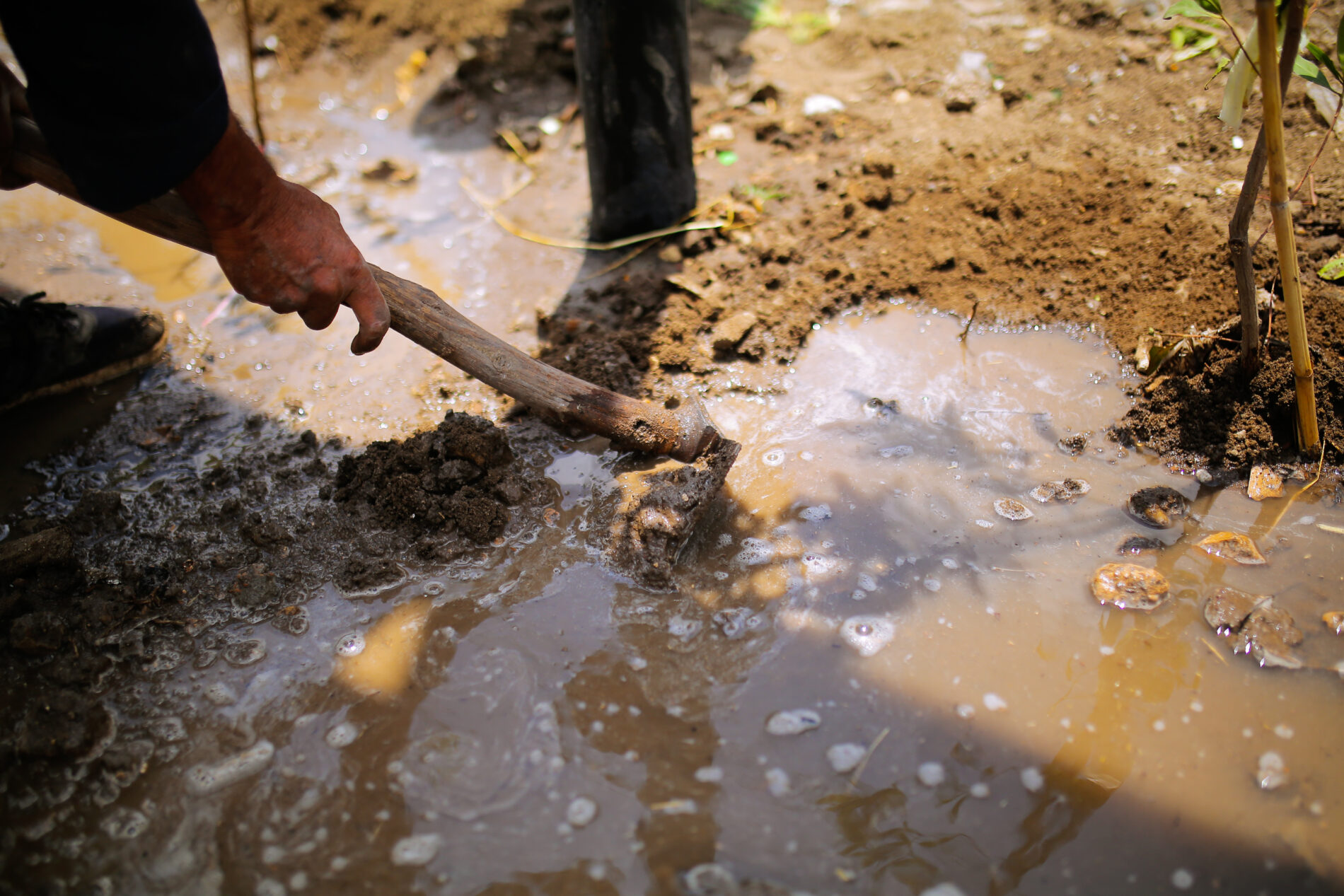
As part of its commitment to promoting environmental sustainability and climate resilience, Etijah, in partnership with GIZ Egypt, continues to implement large-scale tree planting activities under the EU Green: EU Support for Growth through Egyptian Environment Networks / National Solid Waste Management Programme. The programme is implemented on behalf of the European Union and the German Government, in partnership with the Ministry of Local Development and Environment (MoLDE).
The initiative aims to expand green spaces, improve air quality, and contribute to more sustainable and climate-resilient communities across Kafr El Sheikh Governorate.
To date, 2,970 trees have been planted out of the project’s target of 3,150 trees, marking a significant milestone in the programme’s environmental efforts. The plantations have been carried out across villages, urban areas, and key public spaces throughout the governorate, featuring a variety of tree species including Royal Palm, Mulberry, Tecoma, and Poinciana. These species were selected for their environmental value, contribution to biodiversity, and ability to create healthier, greener surroundings.
The tree planting activities have covered a wide range of locations through local civil society partners. Planting sites include Abu Mandour, Konisat El Sardousi, Kafr El Arab, El Agouzein, Sanhour, Mahallet Abu Ali, Kafr Magr, Mahallet Diay, as well as major entrances and roads including Desouk, the Upper Bridge Entrance in Desouk, and Hospital Street in Desouk. Additional plantations have taken place at the Baltim Kafr El Sheikh Road Entrance, the Burullus Protected Area Administration Street.
The tree planting campaign forms part of a broader package of interventions under the National Solid Waste Management Programme that seeks to improve environmental conditions, encourage community participation, and strengthen local climate action initiatives.
Beyond increasing green cover, the initiative contributes to creating healthier public spaces, mitigating the impacts of climate change, enhancing biodiversity, and raising environmental awareness among local communities.
Every tree planted represents another step toward building greener, healthier, and more sustainable communities for future generations.