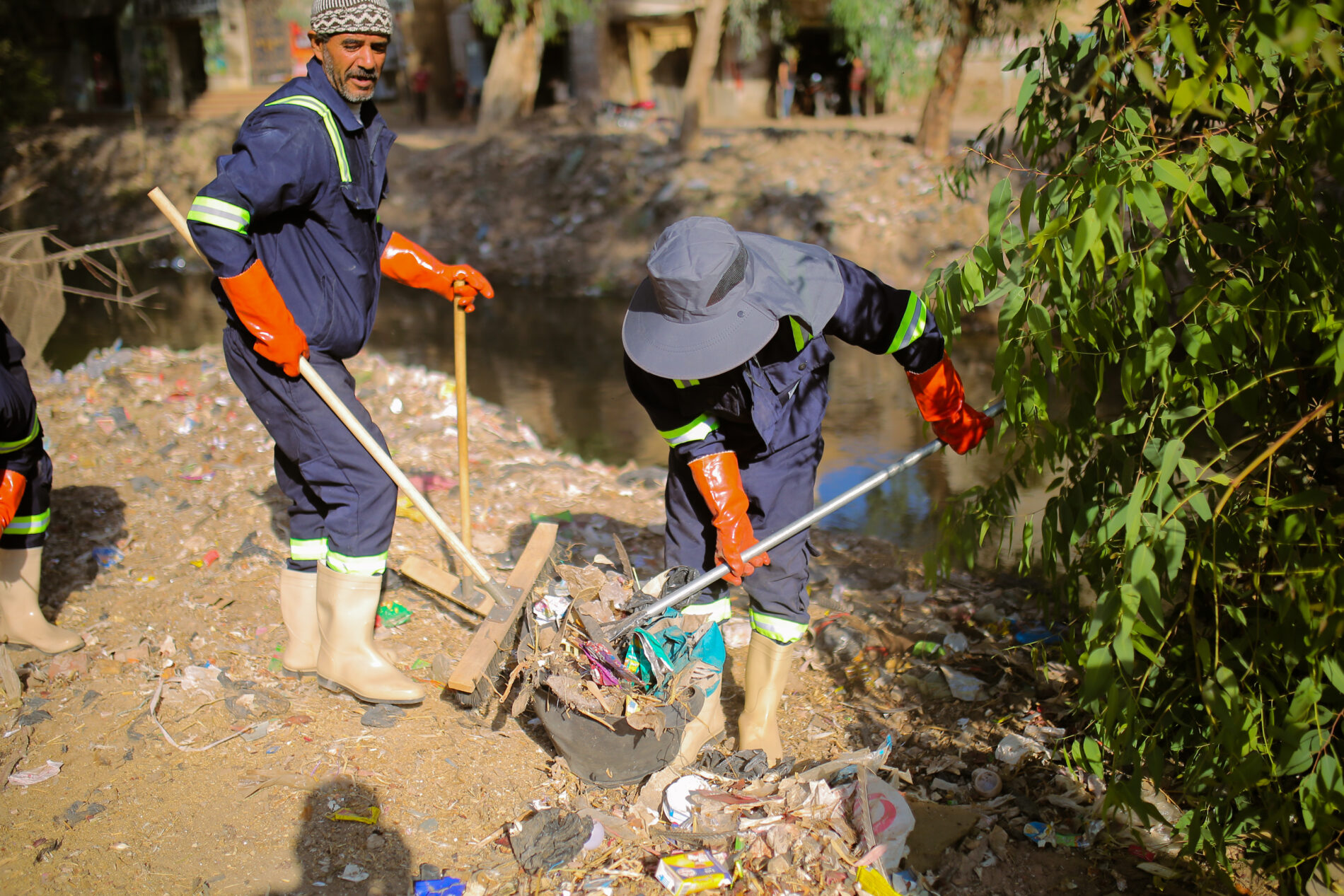
As part of ongoing efforts to promote sustainable waste management and strengthen community participation in environmental protection, Etijah Foundation, in partnership with the German Agency for International Cooperation (GIZ) Egypt, continues implementing waste collection and sorting activities under the EU Green / National Solid Waste Management Programme, implemented on behalf of the European Union and the German Government, in cooperation with the Ministry of Local Development and the Ministry of Environment.
Within this framework, Al Wefaq Association implemented a waste collection and sorting project targeting the villages of Minyat Al Morshed, Abiana, Ezbet Amr, and El Qenni in Motobas District, Kafr El Sheikh Governorate.
Recognizing that sustainable waste management begins with community awareness, the project organized 19 awareness seminars, benefiting 952 community members. The sessions focused on promoting environmentally responsible practices and highlighting the importance of waste segregation at source as a key component of an effective solid waste management system.
To further expand outreach, the project distributed 9,170 awareness brochures and 1,900 educational posters covering environmental conservation, waste segregation at source, and proper waste management practices, helping disseminate key environmental messages throughout the targeted communities.
The project’s field implementation also delivered significant operational results. Over the course of 11 weeks, the initiative successfully collected 462.521 tons of waste, averaging nearly 50 tons per week, demonstrating the strong commitment of both the project team and local communities to improving environmental conditions.
Additionally, the project directly engaged 512 beneficiaries in the source segregation system by providing dedicated waste separation bags and offering household waste collection services, making participation more accessible and encouraging long-term behavioral change.
These achievements highlight the importance of collaborative action between civil society organizations, development partners, and local communities in advancing sustainable development, protecting natural resources, and building cleaner, healthier communities for future generations.