In late December 2022, Etijah launched the Engaging Men and Boys project. The idea behind this project is beyond awareness-raising, targeting suitable conditions for social change. By working with men and boys as drivers of transformation, the project mainly focuses on the societal norms and roots of harmful practices and cultivates local leadership that can stop cycles of tradition-based harm and violence. The project is funded by the UNFPA, with Etijah responsible for managing the funds and implementing the project’s activities. The project has been running since late January 2022 and continues to operate to the present day. If funding is sustained, the project is set to carry on, further expanding its impact and reach.
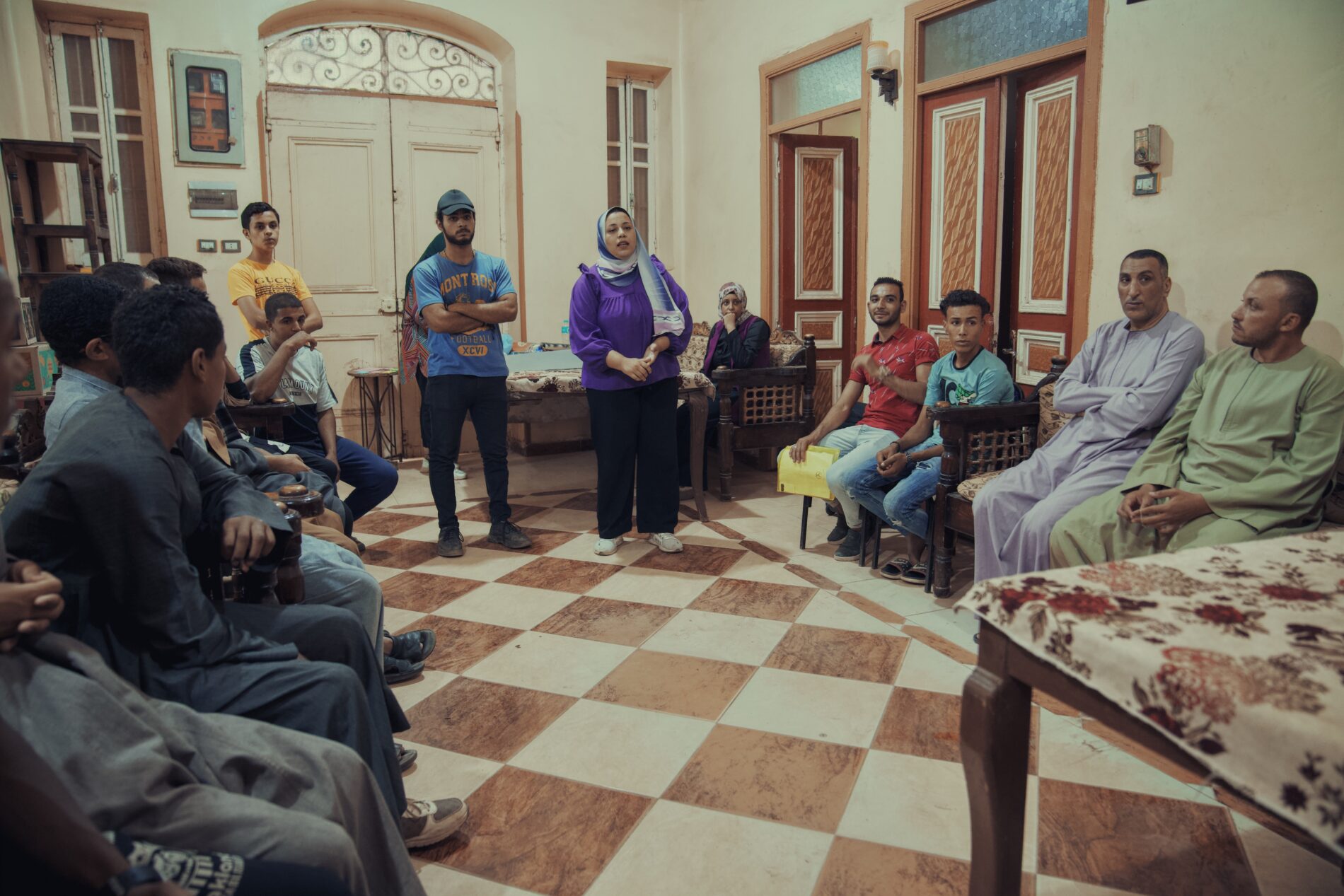
Empowerment process
The project targets men and boys aged 16-45 in rural villages across Sohag, Assiut and Quena. The recruitment process is through the trusted local CBOs that mobilize attendees and identify them, and the sessions are being delivered by locally trained community facilitators to ensure cultural familiarity and trust. Each cohort completes a three-day module of four hours per day (12 hours total), with content designed to fit the rhythm of the topics, moving gradually from general topics to more sensitive ones. All sessions follow clear safe-space principles that prioritize mutual respect, openness, and strict confidentiality
A Transformative Learning Approach
The project’s methodology is relying on using creative tools and activities that resonate participants, which highlights cultural sensitivity and interaction. Key elements of the approach include:
- Interactive learning: Role-plays, group games, and visual exercises keep participants engaged.
- Facilitated reflection: Men are encouraged to critically examine their own beliefs and behaviors. Through comparing between the norms and their effect, and with presenting the new solutions of how to deal with such things
- Emotional engagement: Reflecting the participants experience and their emotions toward some memories that impacted their lives
- Cultural relevance: Training is delivered in local dialects and uses familiar examples.
- Commitment building: Each workshop concludes with participants making personal and collective pledges. These commitments involved speaking out against FGM and turning learning into action
In that way, the project succeeded in creating a safe, welcoming atmosphere. Men feel comfortable sharing their thoughts and gradually shifting their perspectives. Building on this safe, reflective learning environment, the workshops focused on the following themes.
Themes Covered:
- Distinction between gender and biological sex
- Deconstruction of gender norms and stereotypes
- Power dynamics and roots of gender-based violence
- Emotional, social, and economic impacts of harmful practices
- Legal rights and protections
- Positive masculinities and non-violent communication
- Empathy development and emotional intelligence
- Community solidarity and shared responsibility for ending violence
Etijah implemented this project in partnership with the UNFPA